How Earthquake Early Warning Systems Work
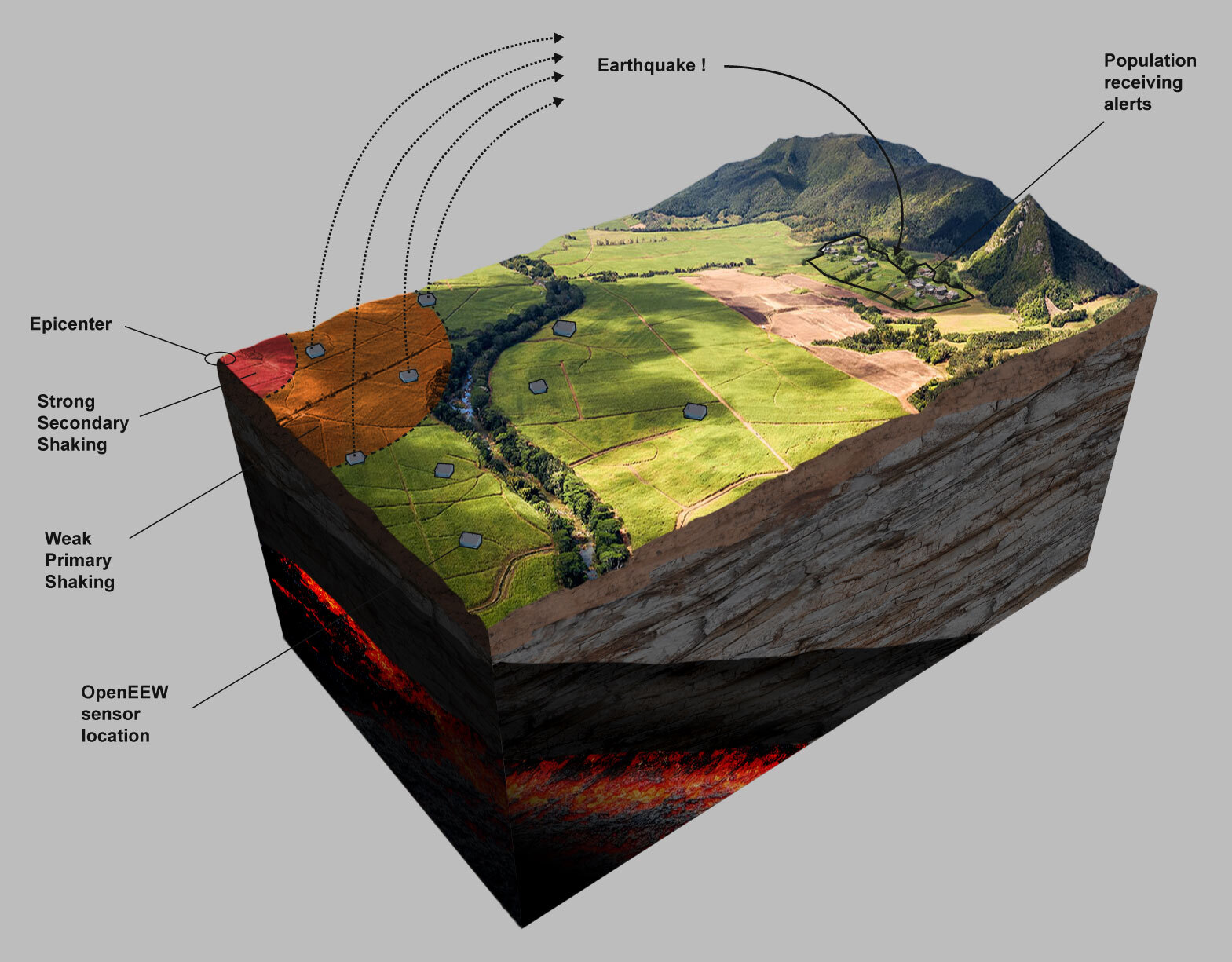
Earthquake early warning (EEW) systems leverage a fundamental property of seismic waves: they travel much slower than electronic signals. This means that sensors near an earthquake's epicenter can detect the event and transmit alerts to distant locations before the damaging waves arrive.
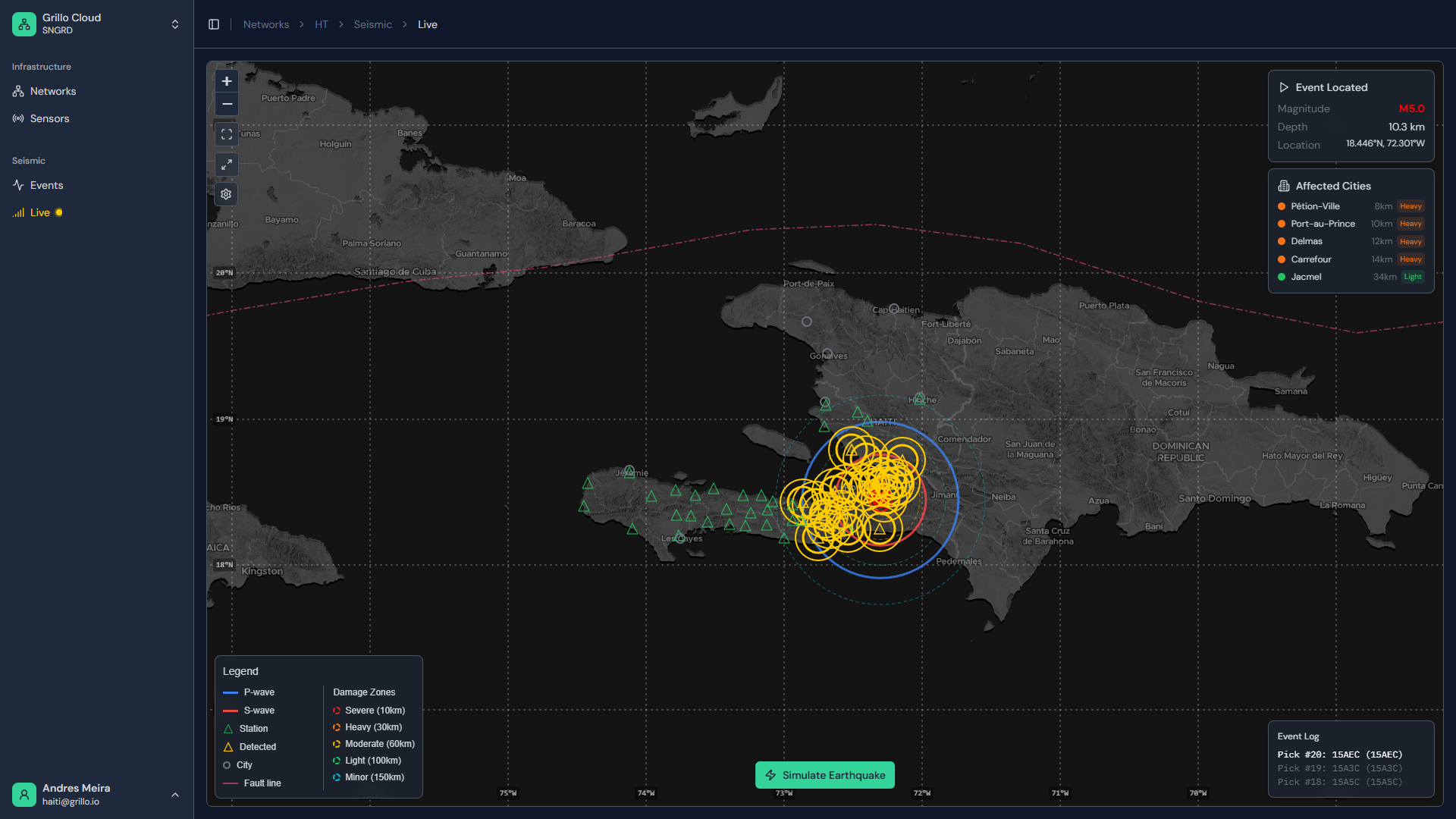
P-Waves vs S-Waves
When an earthquake occurs, it generates two main types of seismic waves:
P-waves (Primary): These compressional waves travel fastest, typically 6-8 km/s in the Earth's crust. They cause a sudden jolt but rarely cause significant damage.
S-waves (Secondary): These shear waves travel slower, around 3-4 km/s, but carry much more energy. S-waves cause the side-to-side shaking that damages buildings.
Detection and Alert
Modern EEW systems work in three stages:
- Detection: Sensors identify the P-wave arrival and begin characterizing the event
- Analysis: Algorithms estimate magnitude, location, and expected shaking intensity
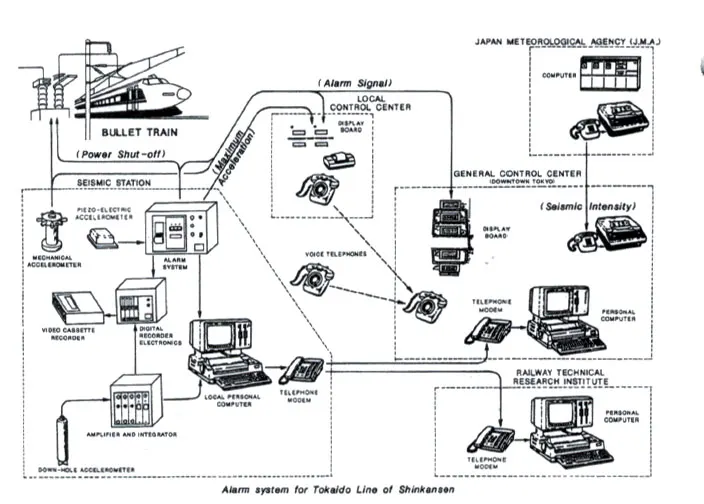
- Alerting: Warnings are sent to areas that will experience significant shaking
Warning Time
The amount of warning time depends on distance from the epicenter. Areas close to the earthquake may receive only a few seconds of warning, while distant locations might have 30 seconds or more.
Even a few seconds of warning can be life-saving—enough time to take protective action, stop elevators, slow trains, and pause surgical procedures.