Peer-Reviewed Study Validates Grillo's Earthquake Early Warning Technology
A peer-reviewed study published in Seismological Research Letters has independently evaluated Grillo's earthquake early warning sensors, validating their performance for seismological applications. The research, conducted by scientists from the Czech Academy of Sciences, the U.S. Geological Survey (USGS), and the University of Oregon, analyzed both laboratory tests and real-world deployment data from Mexico.
The Study
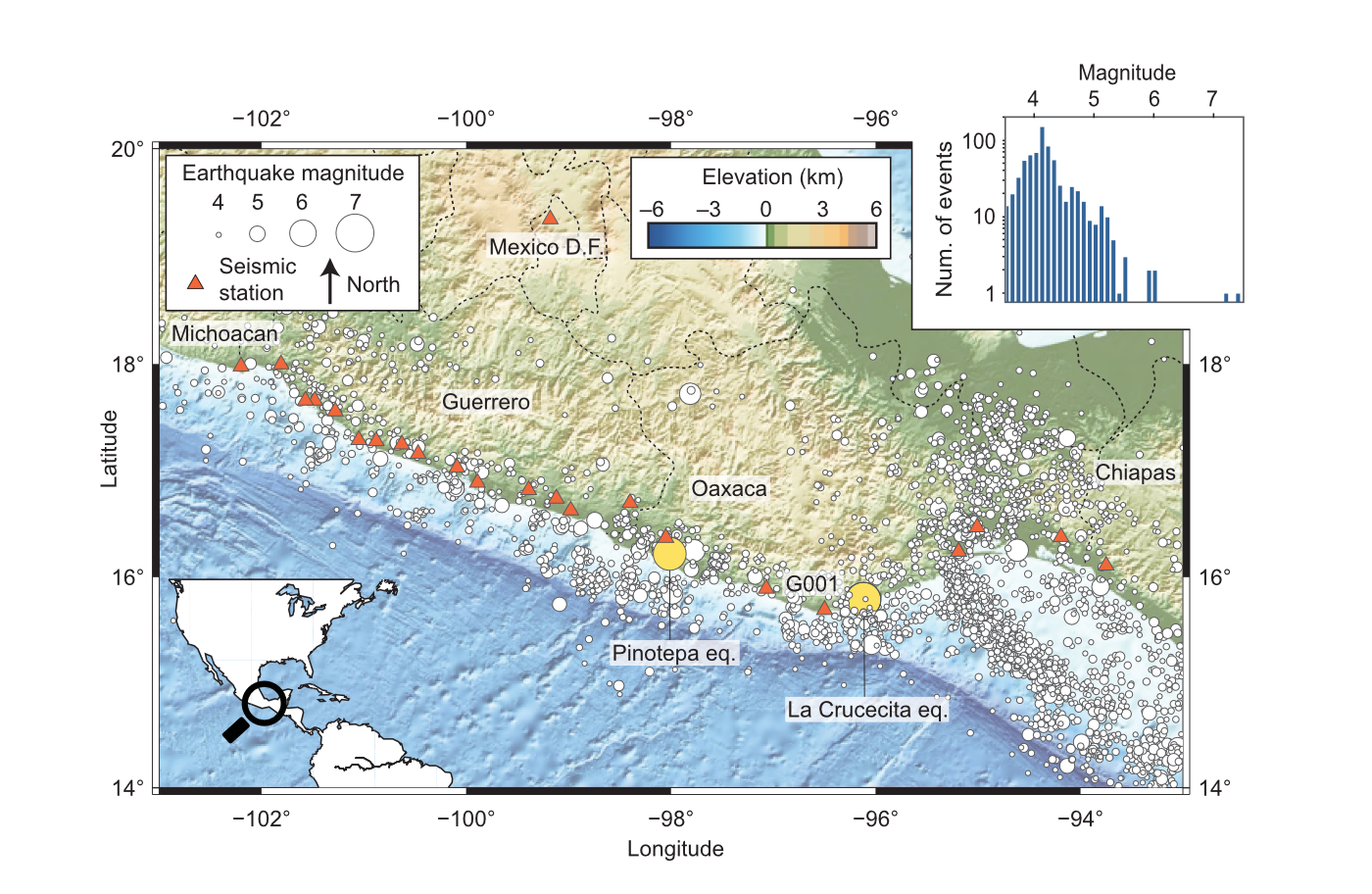
The paper, titled "Evaluation of an Open Earthquake Early Warning System in Mexico, and Laboratory Tests of their Sensors," examines Grillo's MEMS-based accelerometers in detail. The researchers conducted rigorous laboratory testing at the USGS Albuquerque Seismological Laboratory and analyzed data from a 3+ year deployment of 24 Grillo sensors in southern Mexico.
"Grillo sensors can record medium-to-strong events at local and regional distances. The relatively low cost of the instrument together with the simple setup of real-time streaming could be beneficial for real-time seismological and engineering applications such as EEW, SSHM, or densification of existing seismic networks."
Key Findings
The study found that Grillo sensors demonstrate:
- Low and consistent self-noise levels — better than −77 dB relative to 1 m/s²/Hz, competitive with more complex MEMS-based accelerometers
- Precise timing — errors no greater than a few milliseconds for ethernet and WiFi connections
- Fast data transmission — latency up to 200ms depending on connectivity, suitable for real-time applications
- Reliable strong-motion recording — able to capture unsaturated signals from M7+ earthquakes
Real-World Validation
Between 2017 and 2020, the Grillo network in Mexico recorded 722 earthquakes, including two major events: the Mw 7.2 Pinotepa earthquake (February 2018) and the Mw 7.4 La Crucecita earthquake (June 2020). The observed peak ground accelerations matched predictions from established ground-motion models, demonstrating the sensors' ability to accurately capture earthquake shaking across a wide range of amplitudes.
Open Data and Open Source
Importantly, the researchers noted that all data from the Mexican EEW network is openly available. The sensor design itself is also open source, published on GitHub as part of the OpenEEW initiative. This transparency enables other researchers and organizations to build upon Grillo's work.
What This Means
Independent validation from respected research institutions is crucial for earthquake early warning technology. This study confirms that Grillo's approach—using low-cost MEMS sensors with cloud-based processing—can effectively support earthquake early warning systems, structural health monitoring, and network densification efforts worldwide.
The full paper is available in Seismological Research Letters (doi: 10.1785/0220230272).